About this procedure
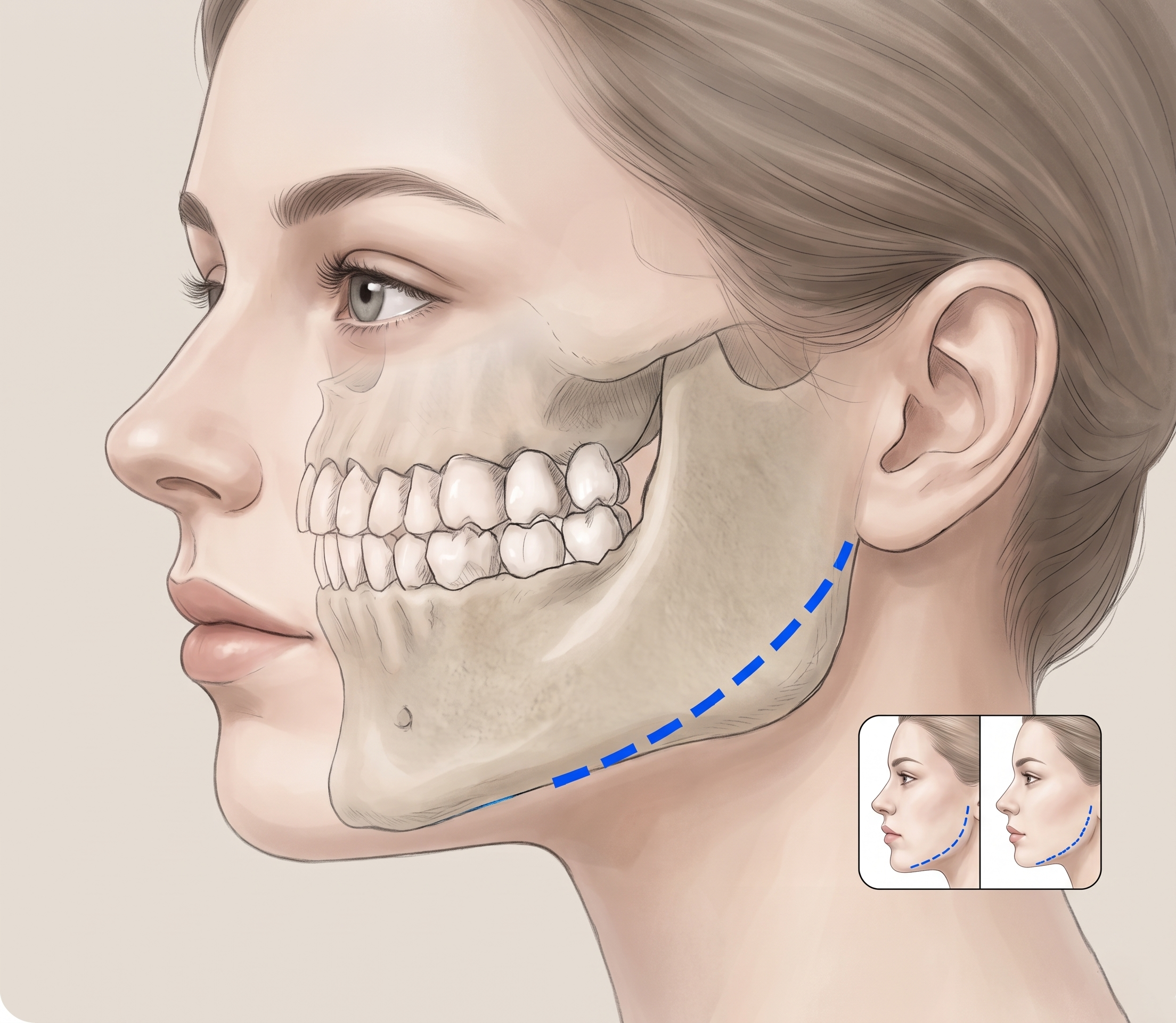
Square Jaw Reduction (Mandibular Angle Reduction) is a facial contouring surgery that reshapes the lower jawbone to create a slimmer, softer, and more balanced facial appearance. The procedure focuses on reducing the width and prominence of the jaw angles, which contribute to a square or boxy face shape.
Square Jaw Reduction Surgical Methods
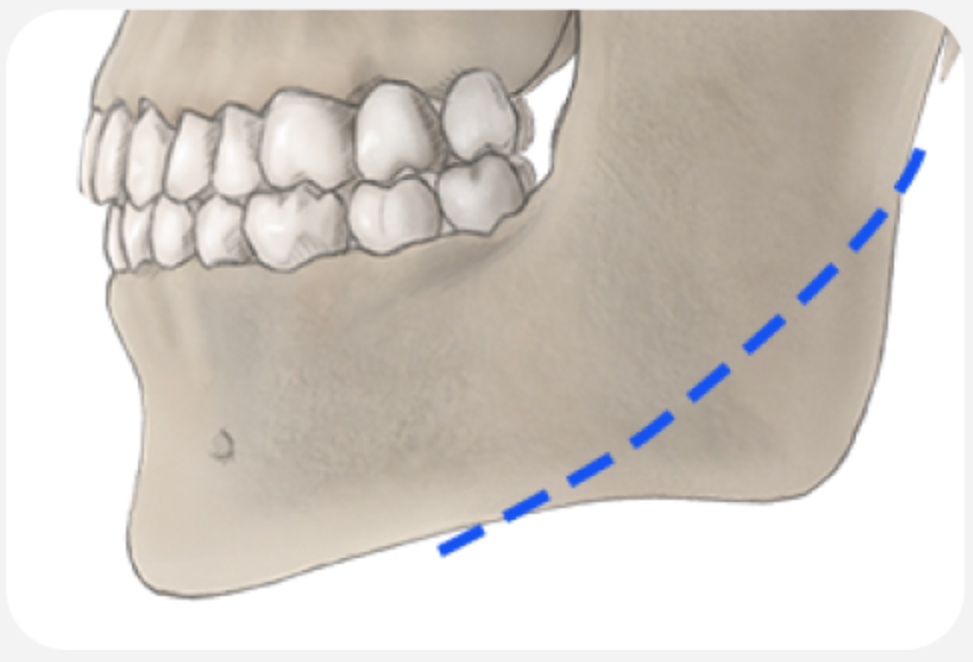
01. Mandibular Angle Reduction (Osteotomy)
A square impression can come from an overall well-developed lower jaw that defines the contour of the lower face, but it most often results from a prominent gonial angle. To create a softer facial shape, surgery to resect this jaw angle has long been performed, and cortical bone reduction is often added for a slimmer front-view effect. Reconstructive surgery that restores the jaw angle is also considered a form of square jaw surgery.
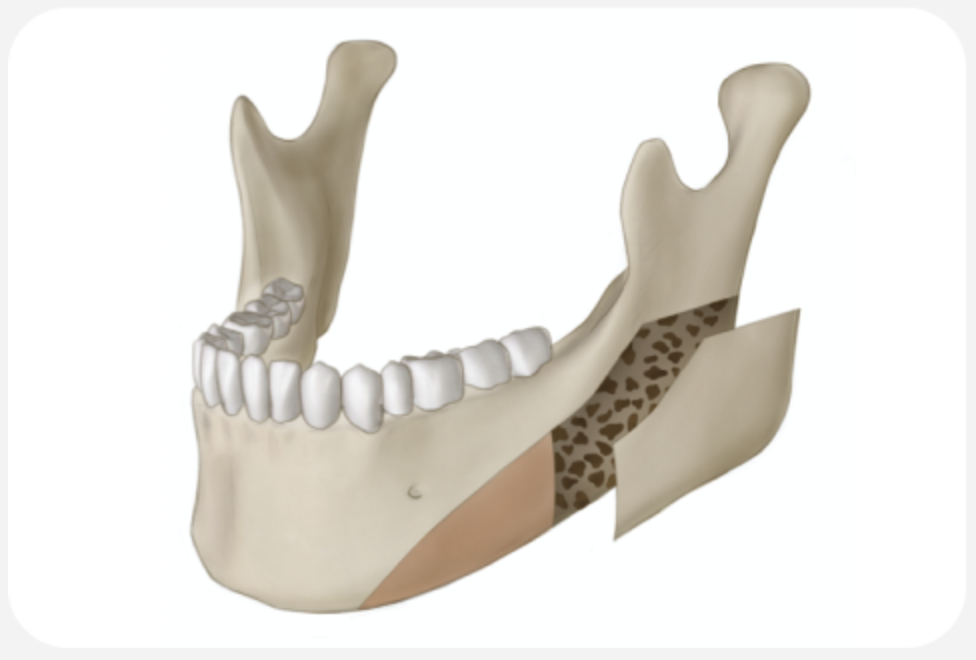
02. Cortical Bone Reduction (Outer-Cortex Shaving)
The lower jawbone is made up of three layers: the outer cortical bone, the spongy (cancellous) bone, and the inner cortical bone. This technique thinly removes the outer cortical layer to reduce the thickness of the jawbone. As the bone thickness decreases and heals, the surrounding muscle also shrinks — so the face appears narrower when viewed from the front.
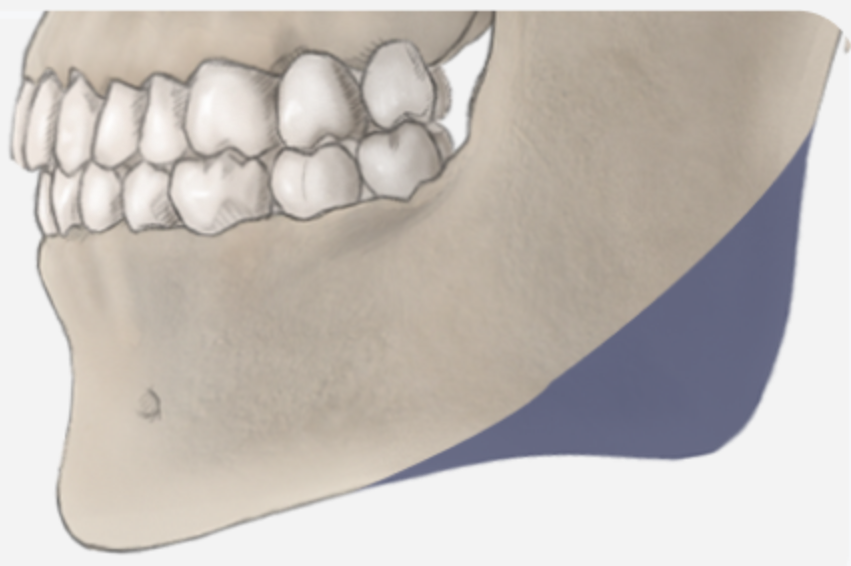
03. Mandibular Angle Reconstruction
This can be performed when a previous square-jaw reduction removed too much bone, leaving the angle below the ear looking deficient, and the patient wishes to restore the jaw angle. Autologous bone or implants such as bone cement, Medpor, or titanium are custom-made in 3D and used for the reconstruction.
Square Jaw Reduction — Procedure
1. Consultation & Imaging
Surgeon evaluates jaw shape, bone thickness, and whether the “square” look comes from bone width, masseter muscle bulk, or both.
3D CT scan or panoramic X-ray is taken to map the jaw angle, bone thickness, and nerve location (especially the inferior alveolar nerve running through the mandible).
This determines whether the case needs bone reduction, muscle reduction (masseter), or a combination.
2. Anesthesia
Performed under general anesthesia, since it involves bone work inside the mouth.
3. Incision
An intraoral incision is made inside the mouth, along the lower gum line near the back molars.
No external skin incision — meaning no visible scar on the face.
4. Accessing the Jawbone
The surgeon dissects through soft tissue and muscle (often partially detaching the masseter muscle) to expose the mandible angle and body.
5. Bone Reduction
Using a surgical saw or burr, the surgeon removes the prominent jaw angle (the back corner of the jaw that creates the “square” look).
This is often done as an L-shaped or curved osteotomy — cutting along the natural curve of the jaw rather than a straight cut, to avoid leaving a new angular step.
Outer-cortex shaving may also be done — thinning the outer layer of bone along the jaw body for a smoother, narrower taper, without weakening the jaw’s structural integrity.
6. Smoothing the Bone Edge
After the bone segment is removed, the remaining edge is filed and smoothed with a rasp or burr to avoid sharp ridges or palpable steps under the skin.
7. Muscle Adjustment (if masseter is contributing to width)
If the masseter muscle is bulky, the surgeon may partially trim or thin the muscle during the same surgery (separate from bone removal).
Some patients instead opt for Botox injections in a separate, non-surgical session to shrink the muscle gradually, rather than surgical trimming.
8. Closing the Incision
The intraoral incision is closed with dissolvable sutures.
A compression garment / facial bandage is often applied afterward to help reduce swelling and support tissue as it heals.
9. Recovery Room
Patient is monitored as anesthesia wears off; same-day discharge or a 1-night hospital stay, depending on clinic protocol and the extent of surgery.
Procedure duration: typically 1.5–3 hours, depending on whether muscle reduction and outer-cortex shaving are included.
Recovery Timeline
Significant swelling for 1–2 weeks, often more pronounced than other facial surgeries due to the bone work.
Soft-food diet recommended for 2–4 weeks while the jaw heals.
Final jaw contour visible around 2–3 months, with subtle settling continuing up to 6 months.
Benefits
Square Jaw Reduction — Benefits
Narrows a wide, square, or boxy jawline into a softer, more tapered shape
Reduces the prominent jaw angle that creates a “wide at the bottom” facial outline
Creates a smoother, more oval or V-shaped lower face
Improves facial balance, especially for those with a lower face disproportionately wider than the mid / upper face
Gives a more refined jawline appearance (commonly requested in facial contouring, especially in Korean aesthetic surgery)
Can soften an overly heavy jaw appearance without changing the chin or cheekbones