About this procedure
Restorative dentistry focuses on repairing or replacing damaged, decayed, or missing teeth to restore proper function, structure, and appearance. This covers crowns, bridges, and dentures (implants were covered separately, though they often work alongside these restorations).
Common types & step-by-step
1. Dental Crowns & Most common Type of Material Used
Zirconia is a strong, durable, and natural-looking material that is commonly used for dental crowns. It is designed to closely match the color of your natural teeth while providing excellent strength for everyday chewing and biting.
Because zirconia is highly resistant to chipping, cracking, and wear, it is an excellent choice for both front and back teeth. It is also biocompatible, meaning it is gentle on the surrounding gums and well tolerated by the body.
Natural-looking color that blends with your smile
Strong and durable for long-lasting results
Resistant to chips, cracks, and everyday wear
Gentle on the gums and biocompatible
Restores both the appearance and function of damaged teeth
- 1
Assessment — dentist examines the damaged tooth (via X-ray) to confirm a crown is the right solution
- 2
Tooth preparation — the tooth is filed down to create space for the crown to fit over it; if the tooth is badly damaged, a filling material may rebuild its core first
- 3
Impressions/digital scan — taken to custom-fabricate the crown (sent to a dental lab, or milled same-day with certain in-office systems)
- 4
Temporary crown — placed while the permanent one is being made
- 5
Permanent crown placement — once ready, the crown is checked for fit and bite, then cemented into place
2. Bridges
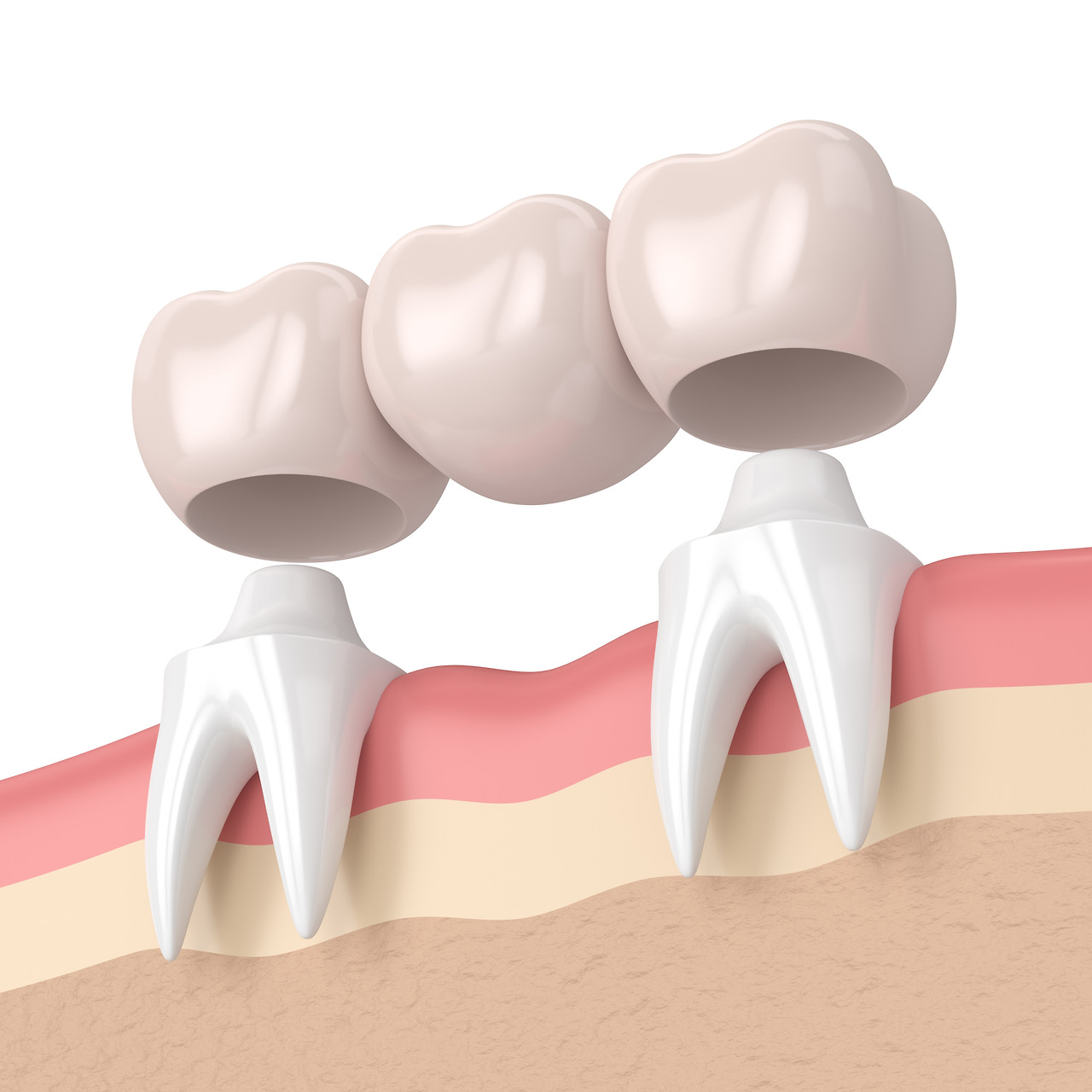
A fixed restoration that replaces one or more missing teeth by anchoring artificial teeth to the adjacent natural teeth (or implants) on either side of the gap.
- 1
Assessment — dentist evaluates the gap and condition of neighboring teeth (abutment teeth) that will support the bridge
- 2
Preparation of abutment teeth — these teeth are filed down similar to crown preparation, since the bridge anchors onto them
- 3
Impressions/digital scan — taken to fabricate the custom bridge, which includes the replacement tooth (or teeth) fused between two crowns
- 4
Temporary bridge — placed while the permanent one is made
- 5
Permanent bridge placement — fitted, adjusted, and cemented onto the prepared abutment teeth
3. Dentures
Removable replacements for multiple or all missing teeth:
Partial dentures — replace several missing teeth, anchored to remaining natural teeth
Full dentures — replace an entire arch of teeth (upper, lower, or both)
- 1
Assessment & impressions — detailed impressions and measurements taken of your gums, jaw, and any remaining teeth
- 2
Bite registration — records taken of how your upper and lower jaw align
- 3
Try-in stage — a wax or trial version of the denture is fitted to check appearance, fit, and bite before final fabrication
- 4
Adjustments — shape, teeth color, and fit refined based on your feedback
- 5
Final denture placement — finished denture is fitted, with instructions on insertion, removal, and cleaning
- 6
Follow-up adjustments — minor fit adjustments over the following weeks as gums settle
What happens afterward
Crowns/Bridges: mild sensitivity for a few days after tooth preparation; once the permanent piece is cemented, it functions like a natural tooth
Dentures: initial adjustment period (days to a few weeks) getting used to speaking and eating; some soreness as gums adapt; follow-up visits often needed to refine fit
Crowns: usually completed over 2 visits (1–2 weeks apart), or same-day with certain digital systems
Bridges: similar to crowns, typically 2 visits over a couple of weeks
Dentures: the full process (impressions → try-in → final fitting) can take several weeks to a couple of months
Benefits
Crowns
Restores strength and function to a damaged or weakened tooth
Protects a tooth from further breakage (especially after root canal treatment)
Natural-looking, color-matched to surrounding teeth
Long-lasting (10–15+ years with good care)
Bridges
Fills gaps from missing teeth without surgery (unlike implants)
Restores chewing function and bite balance
Prevents shifting of remaining teeth into the empty space
Maintains natural facial structure and bite alignment
Dentures
Restores ability to chew and speak clearly when many/all teeth are missing
Improves facial appearance — supports cheeks and lips that may sag without teeth
More affordable option compared to multiple implants
Removable for easy cleaning and maintenance
Customizable for color, shape, and fit to look natural
Overall benefits
Restores oral function (chewing, speaking) lost to damage or missing teeth
Improves long-term oral health by preventing further complications (shifting teeth, bone loss, bite issues)
Enhances smile appearance and confidence
Range of options to fit different budgets, needs, and levels of tooth loss