About this procedure
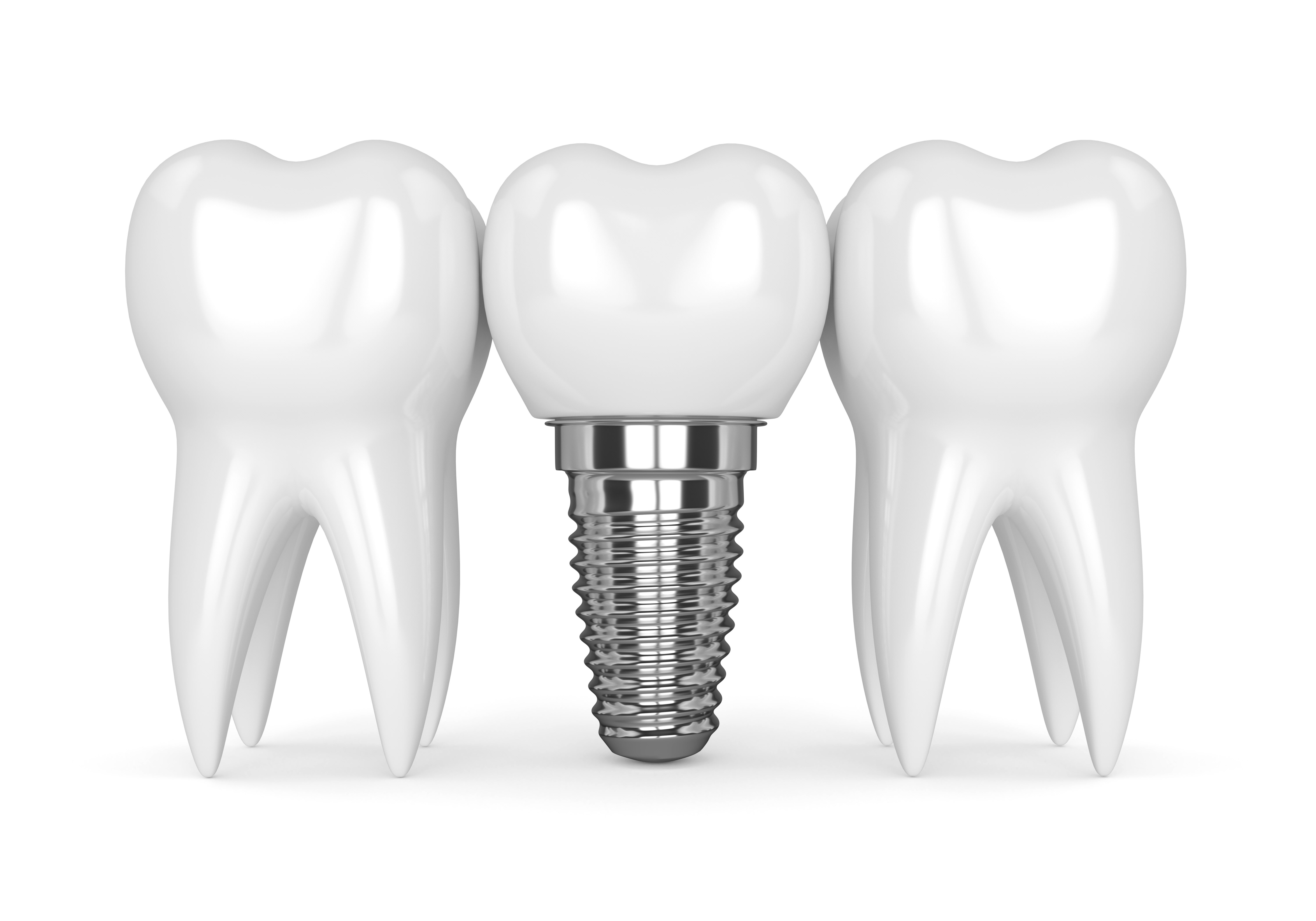
A dental implant replaces a missing tooth from the root up — a titanium (or zirconia) post is surgically placed into the jawbone to act as an artificial tooth root, onto which a crown is attached to recreate the visible part of the tooth. Unlike bridges or dentures, implants stand independently without relying on neighboring teeth.
What it is
A dental implant replaces a missing tooth from the root up — a titanium (or zirconia) post is surgically placed into the jawbone to act as an artificial tooth root, onto which a crown is attached to recreate the visible part of the tooth.
Unlike bridges or dentures, implants stand independently without relying on neighboring teeth.
About this procedure
Step-by-step procedure
- 1
Consultation & assessment — The dentist examines your jawbone density, gum health, and overall oral condition, often using X-rays or a 3D CT scan, to plan implant placement and check if you’re a good candidate.
- 2
Bone grafting (if needed) — In some cases, a bone graft can be performed at the same time with a tooth extraction. However, this depends on your bone condition and will be determined by your surgeon after a thorough evaluation. If a bone graft is needed, it typically requires 2–3 months to heal before the dental implant can be placed, allowing the bone to become strong enough to support the implant.
- 3
Implant placement (surgery)
- Local anesthesia (or sedation, depending on the case) is administered.
- The dentist makes a small incision in the gum to access the jawbone.
- A precise hole is drilled, and the titanium implant post is placed into the bone.
- The gum is stitched closed over or around the implant.
- 4
Healing / osseointegration period
- This is the most critical phase — over 2–6 months, the jawbone gradually fuses with the implant surface, creating a strong, stable foundation (osseointegration).
- A temporary tooth or healing cap may be used during this time.
- 5
Abutment placement — Once healing is confirmed, a small connector piece (abutment) is attached to the implant, which will hold the visible crown.
- 6
Crown placement
- Impressions / digital scans are taken to create a custom crown matching your natural teeth in shape and color.
- The finished crown is attached to the abutment, completing the restoration.
What happens afterward
First few days: mild swelling, soreness, possible bruising at the surgical site — managed with pain medication.
1–2 weeks: stitches (if used) heal, initial discomfort resolves.
2–6 months: osseointegration occurs gradually — no visible change during this period, but it’s essential for long-term stability.
Final crown placement: once integration is confirmed via X-ray, the visible restoration is completed.
Typical treatment timeline
Single implant: total process from placement to final crown can take 3–6 months.
Multiple implants / full mouth: more complex planning, sometimes longer, depending on number of teeth and bone condition.
Immediate-load implants (in select cases): a temporary crown can be placed the same day, though the final crown still waits for full healing.
Benefits
Looks and functions like a natural tooth — the most realistic tooth replacement option available
Doesn’t rely on neighboring teeth — unlike bridges, surrounding healthy teeth aren’t altered or weakened
Preserves jawbone — stimulates bone like a natural tooth root, preventing the bone loss that occurs with missing teeth
Long-lasting — with proper care, implants can last 20+ years or even a lifetime
Stable and secure — no slipping or shifting, unlike removable dentures
Restores full chewing function — bite force close to that of natural teeth