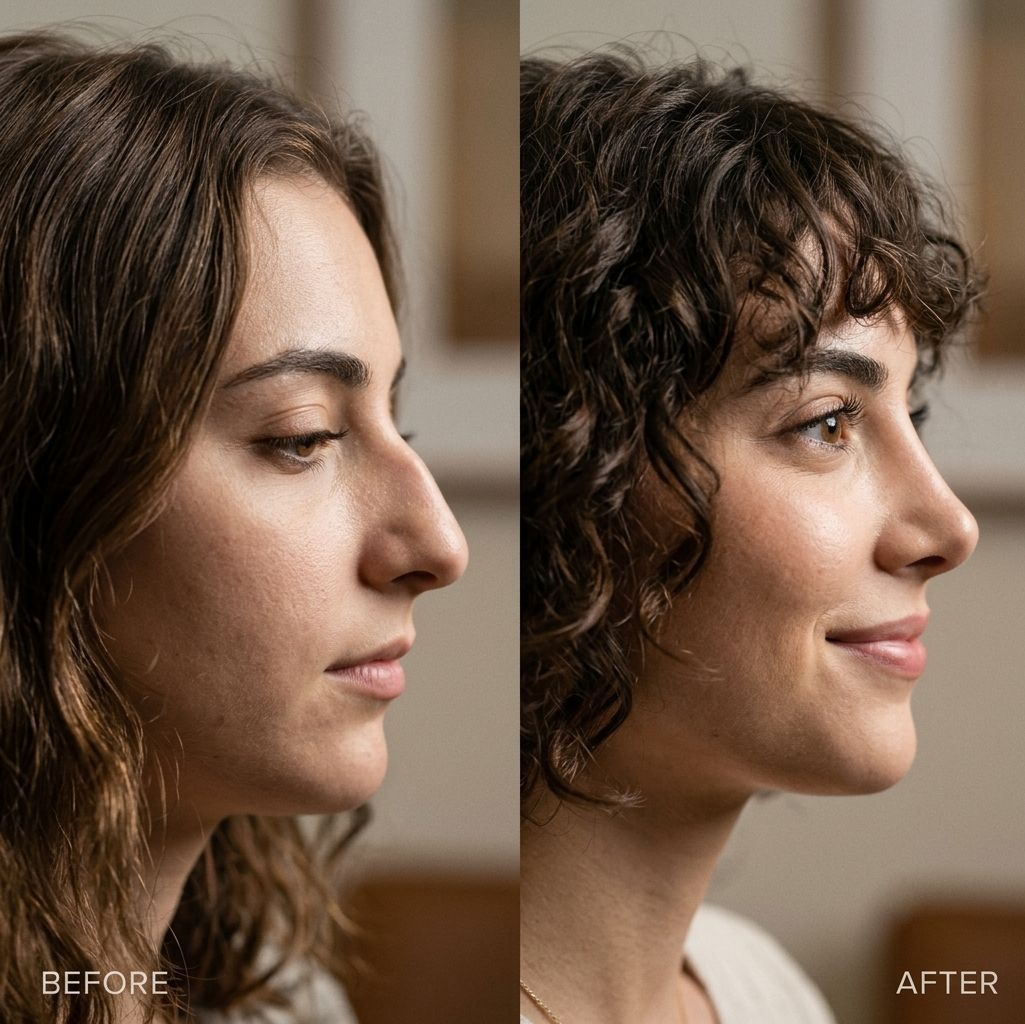
About this procedure
If you are unhappy with the results of a previous nose surgery or have experienced changes over time, Revision Rhinoplasty can help refine and restore the appearance and function of the nose. This highly customized procedure addresses concerns such as asymmetry, irregular contours, structural issues, or breathing difficulties resulting from prior surgery. By carefully evaluating your unique anatomy and goals, revision rhinoplasty aims to achieve a more balanced, natural-looking result that enhances facial harmony while improving confidence and, when needed, nasal function.
When is revision rhinoplasty possible?
We recommend waiting at least 6 months to 1 year before undergoing revision surgery.
Tissues must be stabilized to ensure a successful revision surgery.
As individual recovery varies, you should determine the appropriate timing through a thorough consultation.
In cases of inflammation at the surgical site, displaced implants, or severe redness of the nasal skin with a risk of perforation, immediate revision surgery is required to address the issue promptly.
Aria's Guide — Revision Rhinoplasty Q&A
Do you use the same type of implant as my first rhinoplasty?
If there were no particular problems with the implant from your first nose surgery, it is not always necessary to replace it during revision. However, beyond dissatisfaction with the shape, the existing implant is replaced in most cases for reasons such as the implant showing through the skin or inflammation.
Over time, will a revised nose also become an upturned (piggy) nose?
If revision for an upturned tip is done simply by lowering the tip with the same method as before, the tip tends to rise again as time passes. But if your own (autologous) cartilage is used to bring the tip down and fix it firmly to the alar cartilage at the tip, the gradual upturning can be prevented and the nasal tip can be softly and lastingly improved.
What should I consider when choosing a clinic for nose revision surgery?
Because of inflammation, contracture, and tissue changes left by the first operation, revision rhinoplasty is one of the more difficult procedures. It requires accurately diagnosing and analyzing the cause of the previous result and then designing the surgery to match. Rather than rushing the decision out of anxiety about a revision, you should decide only after a thorough consultation with a specialist who has extensive revision experience and a deep anatomical understanding.
Benefits
Revision Rhinoplasty — Benefits
Corrects visible asymmetry or irregularities left from a previous rhinoplasty
Fixes a "pinched" or overly narrow tip from prior over-reduction
Restores a more natural bridge contour if previous surgery left visible bumps, dips, or collapse
Corrects an overly upturned or "piggy" nose look from excessive tip rotation in the initial surgery
Improves nasal profile balance that didn’t turn out as planned the first time
Can fix scar tissue irregularities or contour deformities causing visible lumps under the skin
Restores nasal airway function if previous surgery caused or worsened breathing problems
Corrects internal or external nasal valve collapse common after over-aggressive cartilage removal
Repairs structural support lost from prior cartilage over-resection, which can cause both cosmetic and breathing issues
Resolves chronic congestion caused by scar tissue or altered internal nasal structure from the first surgery