About this procedure
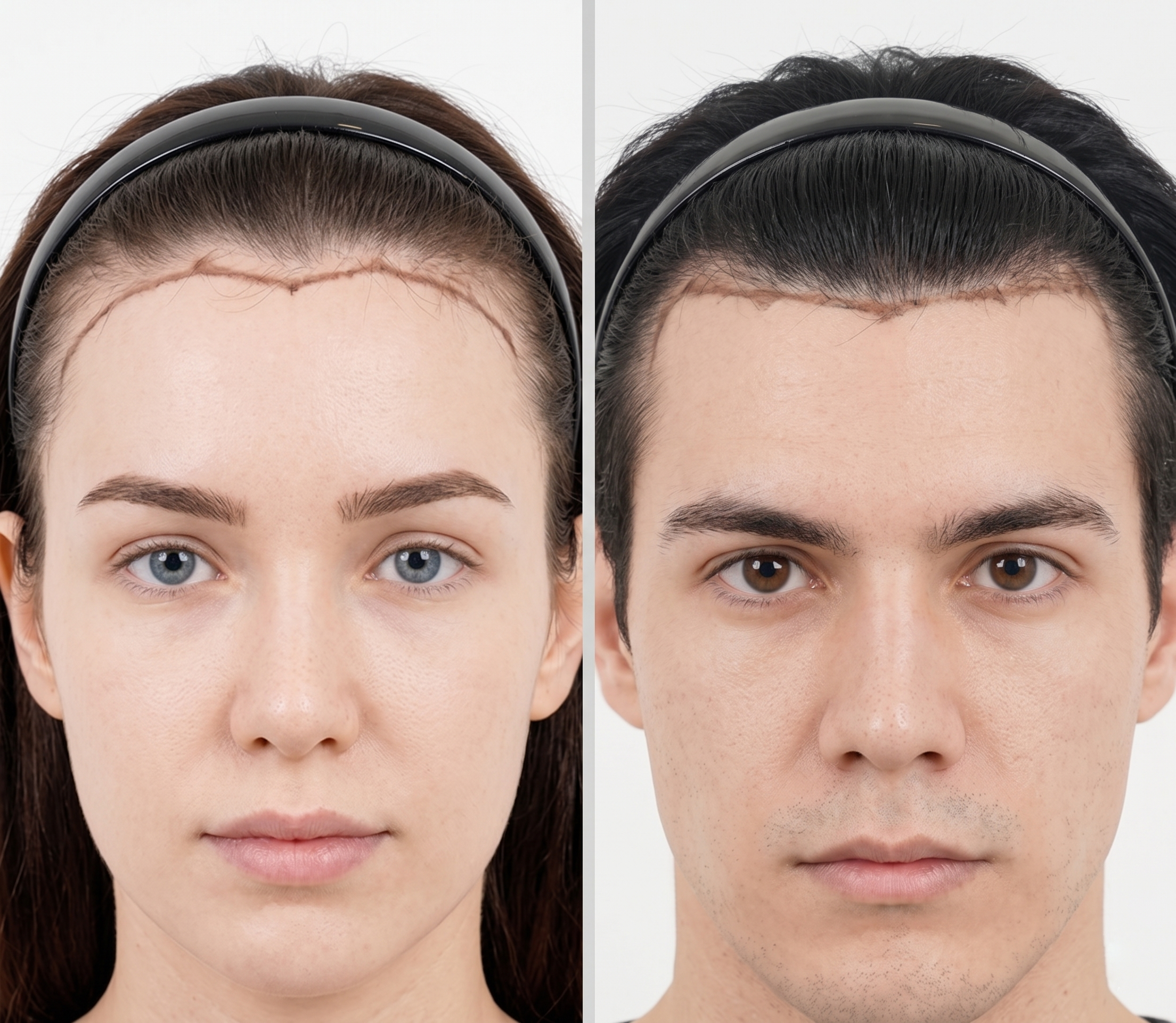
Hair transplantation is considered one of the least invasive surgical procedures for reducing the perceived size of the face. Furthermore, it creates a youthful appearance by refining and reshaping the hairline.
Typically, the most common procedure involves 3,000 grafts, which allows for an average lowering of the hairline by 2cm. The maximum number of grafts possible can be determined after an examination of the donor area (the back of the head); depending on the patient, we can transplant up to 4,000 to 7,000 grafts in a single session.
Our services are categorized into Male Pattern Hair Loss Care and Female Hairline Care:
Male Pattern Hair Loss
In most cases, male hair loss is genetic. Transplanted hair, harvested from the back of the head, is immune to the effects of androgenetic alopecia. Once transplanted, these hairs remain healthy and continue to grow for a lifetime in their new position.
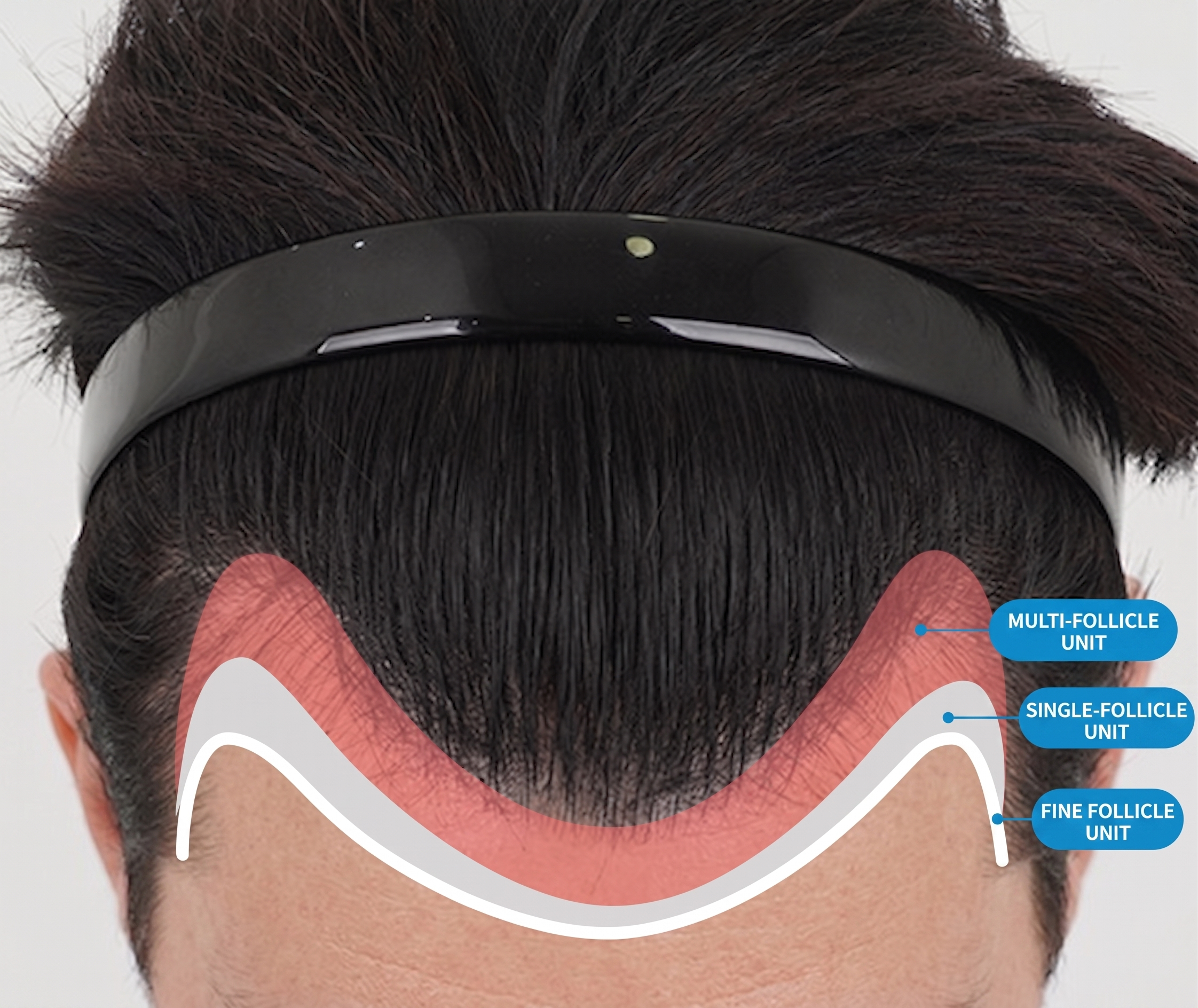
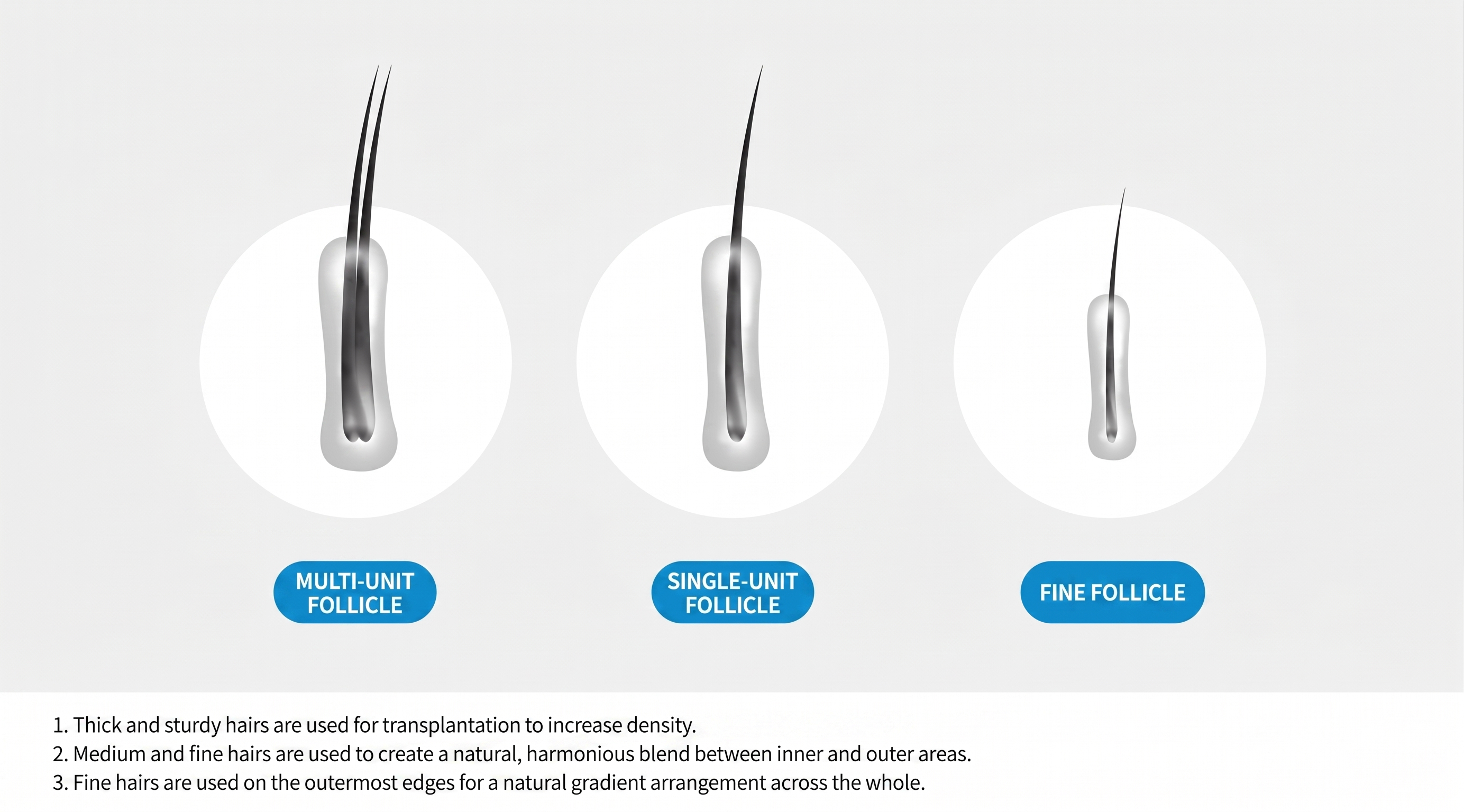
We select the type of hair follicles based on your hair condition and transplant them to create a natural gradient between your existing hair and the transplanted hair. For M-shaped or C-shaped receding hairlines, we divide the area into the front, middle, and inner sections, performing a gradient transplant that becomes increasingly natural as it moves inward.
Female Hairline Care
Hair loss in women is primarily caused by stress or acquired environmental factors. Most female patients opt for transplantation to address localized thinning or to lower their forehead line, which creates a more youthful and balanced facial profile.
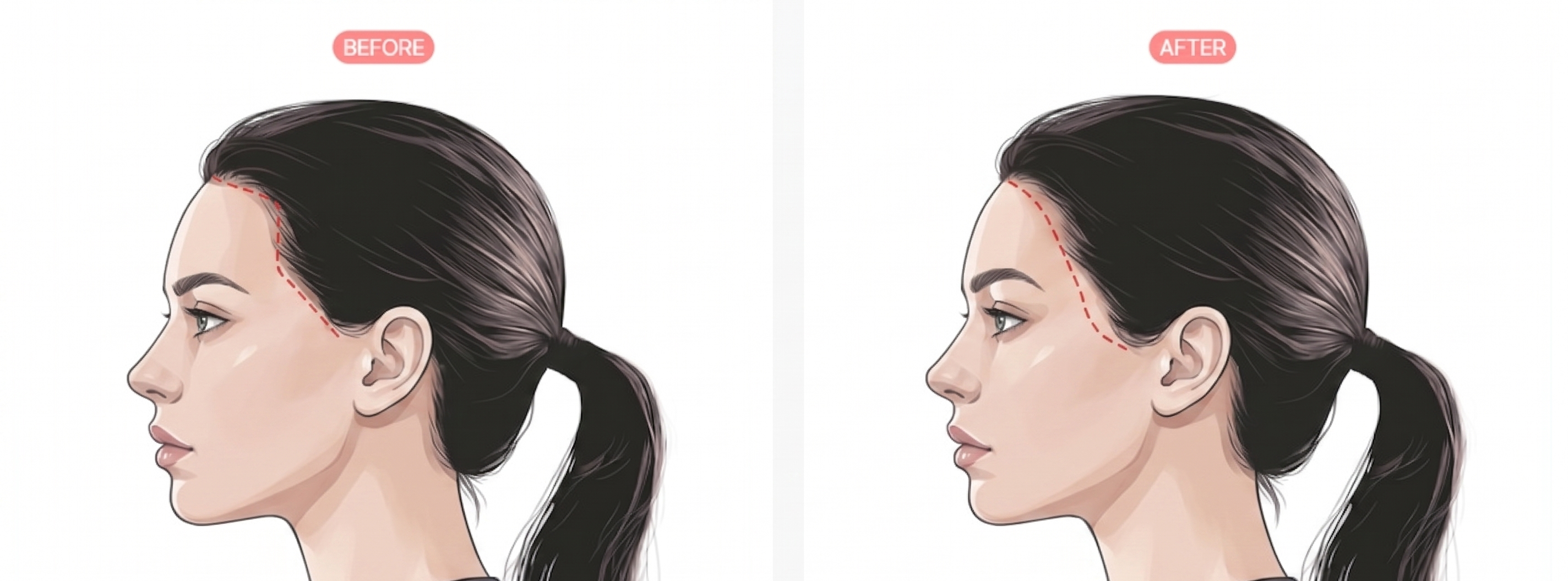
Unlike men, a female hairline is naturally curved and soft. In particular, a natural-looking transition must be created by connecting the curve between the forehead and temple, as a side view that is too angular or straight can look unnatural.
Hair Harvesting Methods
1. Follicular Unit Transplantation (FUT / Strip Method)
This method involves removing a linear strip of scalp from the back of the head and dissecting it to harvest individual hair follicles.
Advantages — Faster surgical time and the most cost-effective option.
Note on Scarring — While this method does leave a linear scar, we use a specialized technique to transplant hair directly into the scar area. After approximately two years, the scar becomes nearly invisible, so there is no need for major concern.
2. Follicular Unit Extraction (FUE / Non-Incision Method)
This method involves extracting hair follicles one by one directly from the back of the head.
Advantages — This is the most popular modern method, as it leaves virtually no visible scarring.
Note — Because each follicle is harvested individually, the process requires more time, and the procedure cost is higher compared to the strip method.
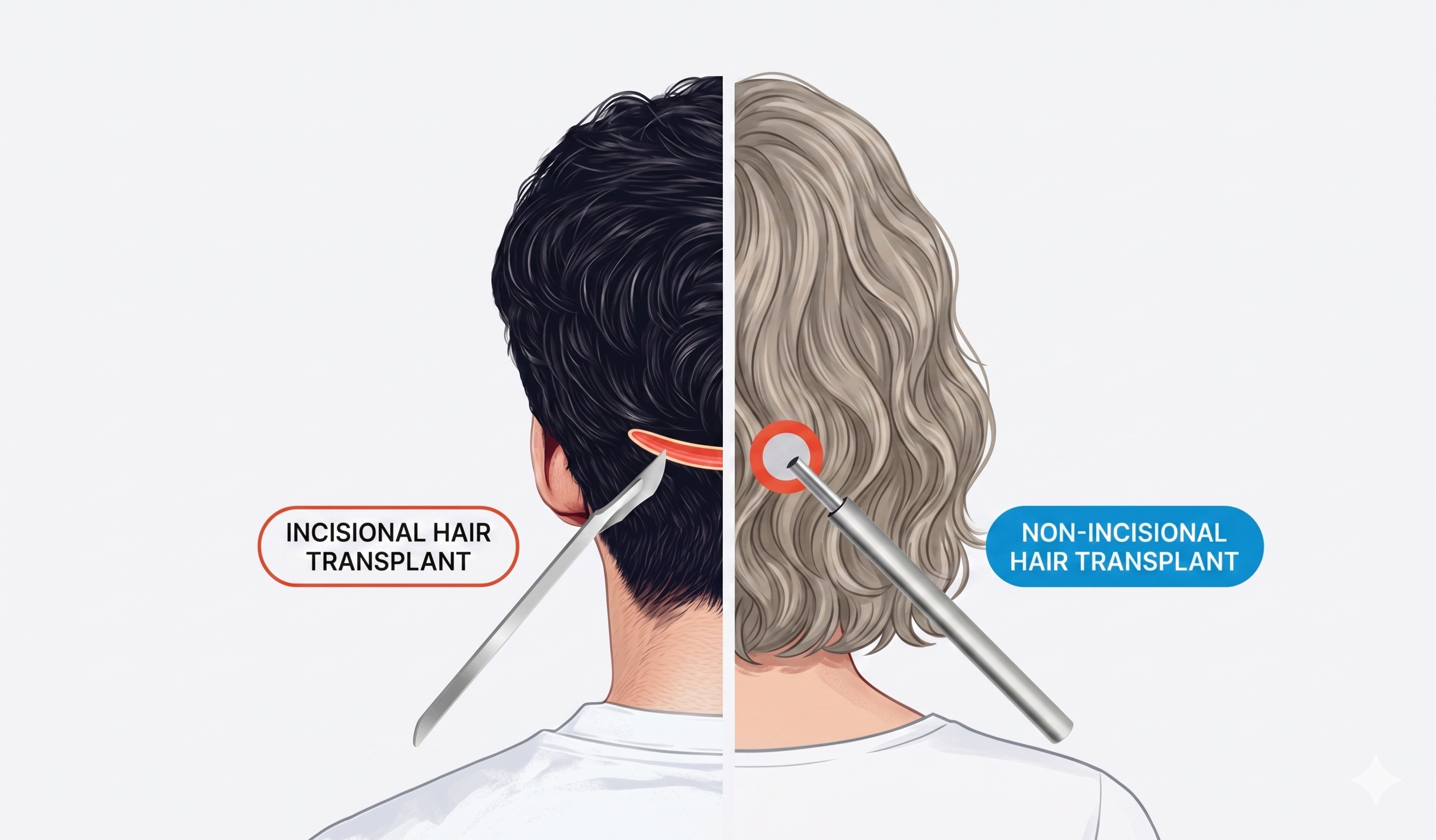
The illustration compares the two harvesting techniques. The incisional method (FUT) removes a strip of scalp from the donor area, while the non-incisional method (FUE) extracts each follicle individually.
Choosing a method
FUT is faster and more economical; FUE leaves virtually no visible scarring. Your surgeon will recommend the best option based on your donor area, scarring tolerance, and aesthetic goals.
Benefits
Hair Transplant — Benefits
Minimally Invasive Facial Contouring — Among all facial slimming procedures, hair transplantation is one of the least invasive options to reduce the perceived size of the face.
Convenient Recovery for Travelers — You can return home as early as 2 days post-surgery, making it an ideal procedure even for those with short travel itineraries.
Permanent Solution for Male Pattern Hair Loss — Provides a permanent, lifelong treatment for genetic hair loss.
Scar Camouflage — Effectively conceals surgical scars from previous procedures, such as forehead reduction or facial lifting.
Youthful Aesthetic Enhancement — By lowering the hairline by at least 2cm, it can visibly reduce your perceived age by up to 5 years.
Customizable Multi-Session Planning — Depending on your density needs, the procedure can be performed up to 3 times, with 1-year intervals between sessions.