About this procedure
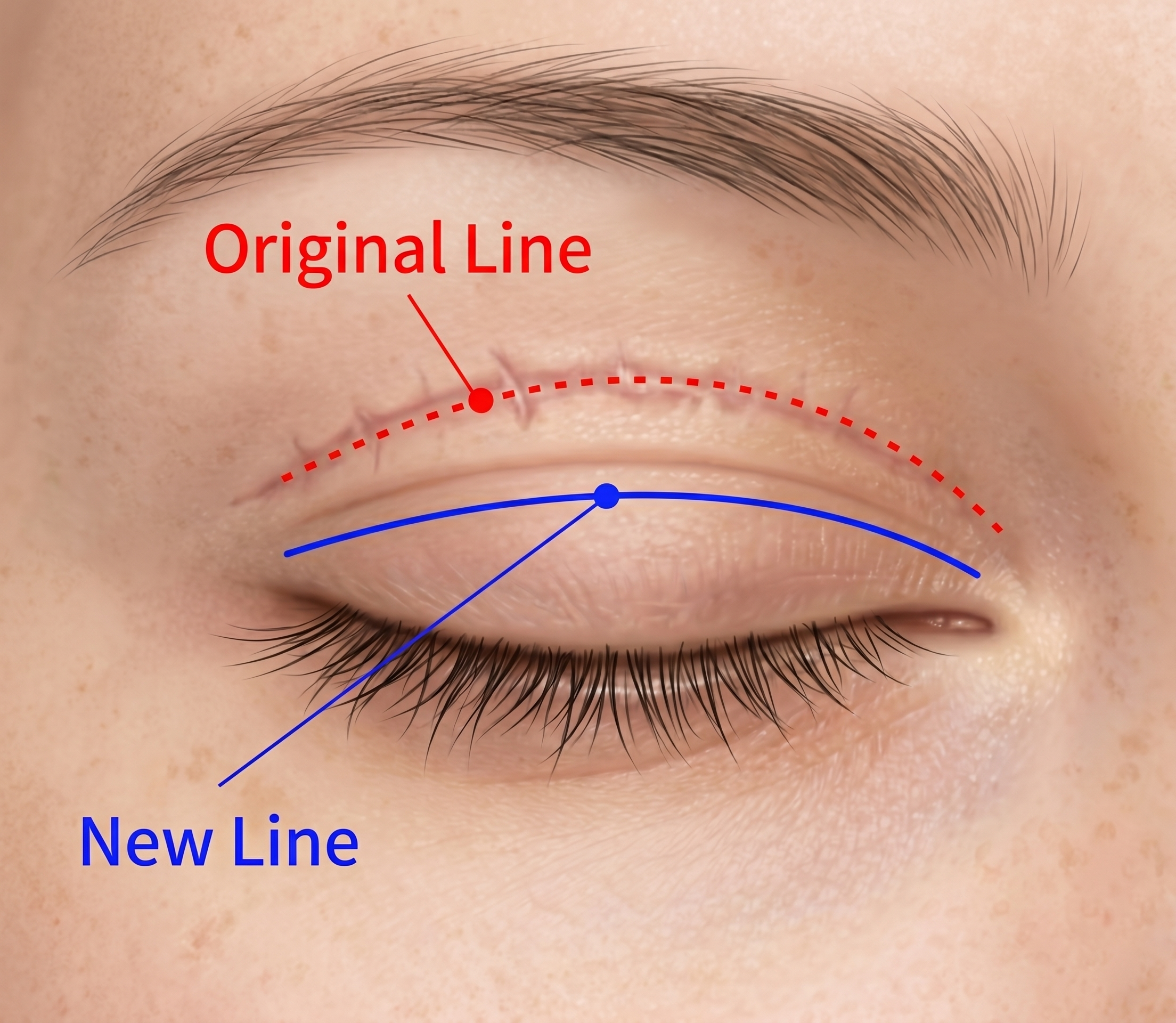
If you are dissatisfied with the results of a previous eye surgery or have experienced changes over time, Eye Revision Surgery can help restore balance, function, and confidence. This customized procedure addresses concerns such as asymmetry, scarring, multiple eyelid folds, or an unnatural appearance by refining and correcting the previous surgical outcome. With a personalized approach tailored to your unique needs, eye revision surgery aims to create more natural, harmonious, and aesthetically pleasing results while preserving the character of your eyes.
How Eye Revision Surgery Works
Adhesions along the existing crease are released and a new crease is created at the desired position. There are two main techniques:
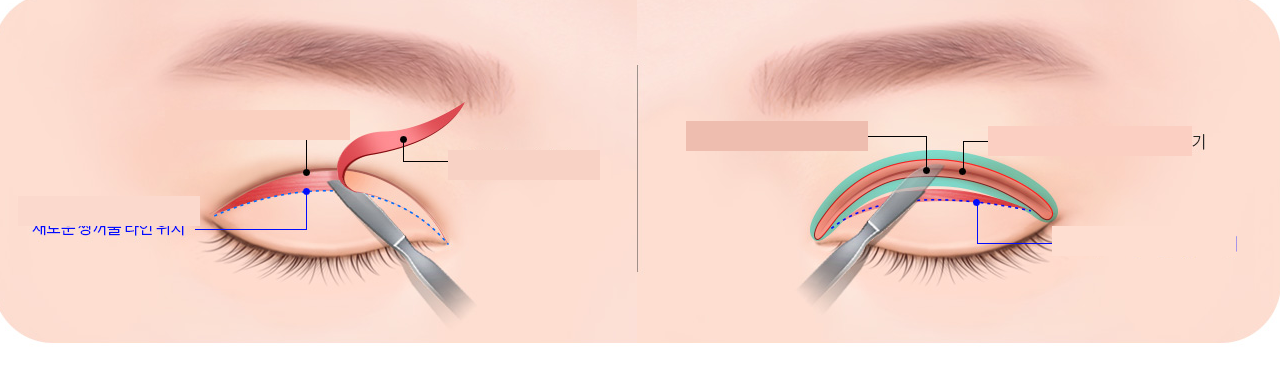 Existing creaseSkin & tissue removedNew creaseRelease, skin keptRelease existing lineNew crease
Line-Lowering — Surgical Process
Tissue including the previous incision line is removed, the high fixation is released, and the crease is re-fixed at a lower position.
 Existing creaseSkin & tissue removedNew crease
The scar tissue and incision line from the previous surgery are removed.
 Lower fixation after releaseNew crease forms
After releasing the adhesion, the crease fixation point is lowered to form a new line.
Double-Line Method — Surgical Process
A new crease is created below the old one: the previous high adhesion is released so the original line fades, and a new, lower crease forms.
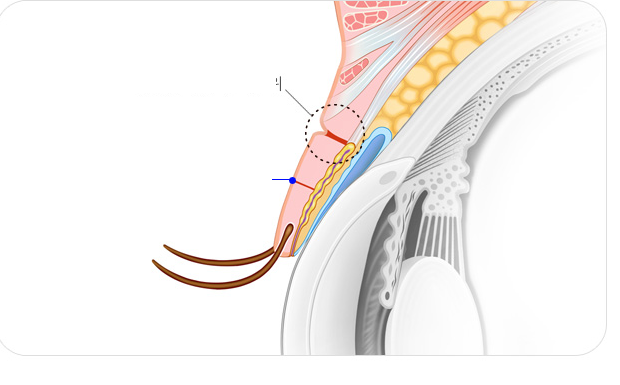 High adhesionIncision at new lower height
A new crease line is incised below the existing high line.
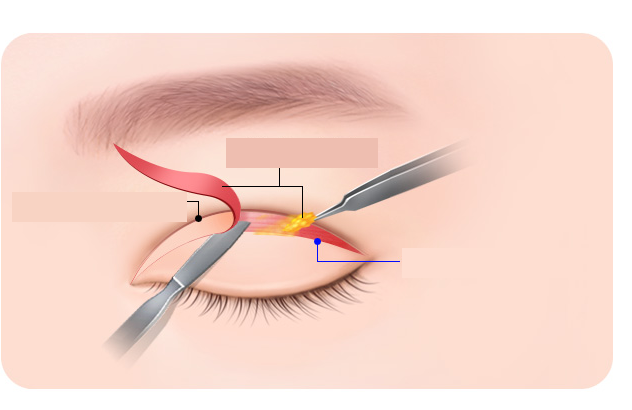
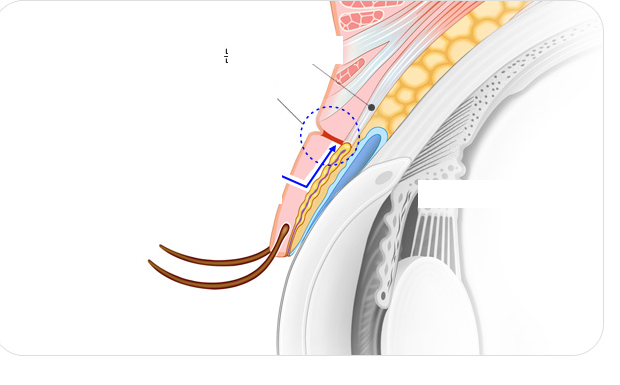 Levator muscleHigh adhesionDissect upward to releaseOld scar & adhesion
Dissecting upward, the old high crease adhesion is released.
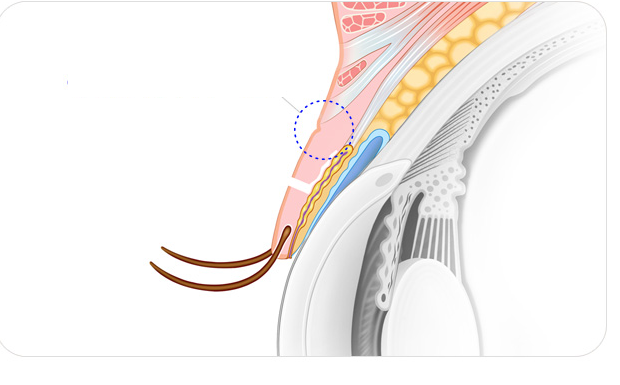 Old crease mark fades
Once the old high adhesion is freed, the previous crease mark fades.
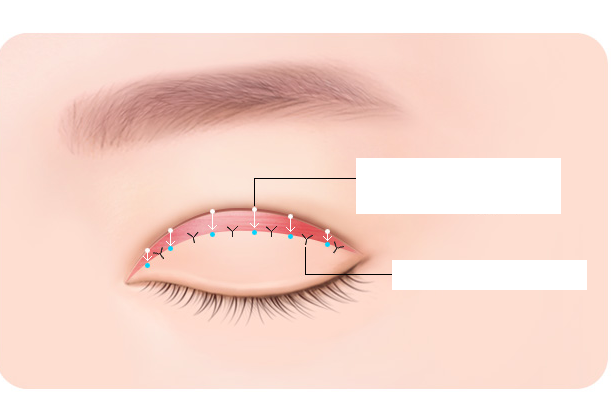
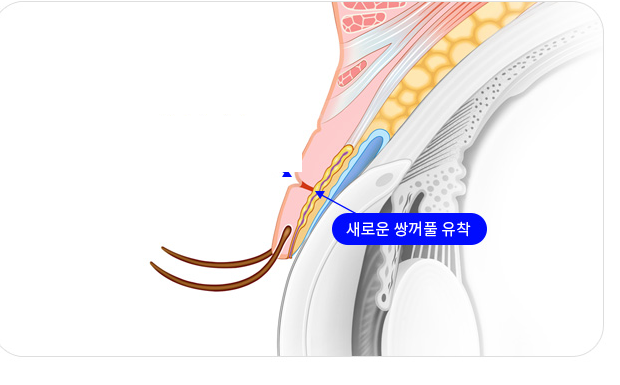 New lower creaseNew adhesion
Re-adhering at a lower position creates the new crease line.
Benefits
Benefits
Corrects asymmetry left over from a previous eyelid surgery
Fixes an unnatural, overly high, uneven, or disappearing crease from prior double eyelid surgery
Addresses scarring, indentation, or "multiple folds" from failed incisional procedures
Restores a more natural-looking eye shape after over-resection (too much skin/fat removed)
Corrects dry eye or irritation caused by inadequate lid coverage from prior over-correction
Resolves vision obstruction if a prior procedure under-corrected ptosis or left residual drooping
Improves comfort if scar tissue from earlier surgery is causing tightness, pulling, or irritation