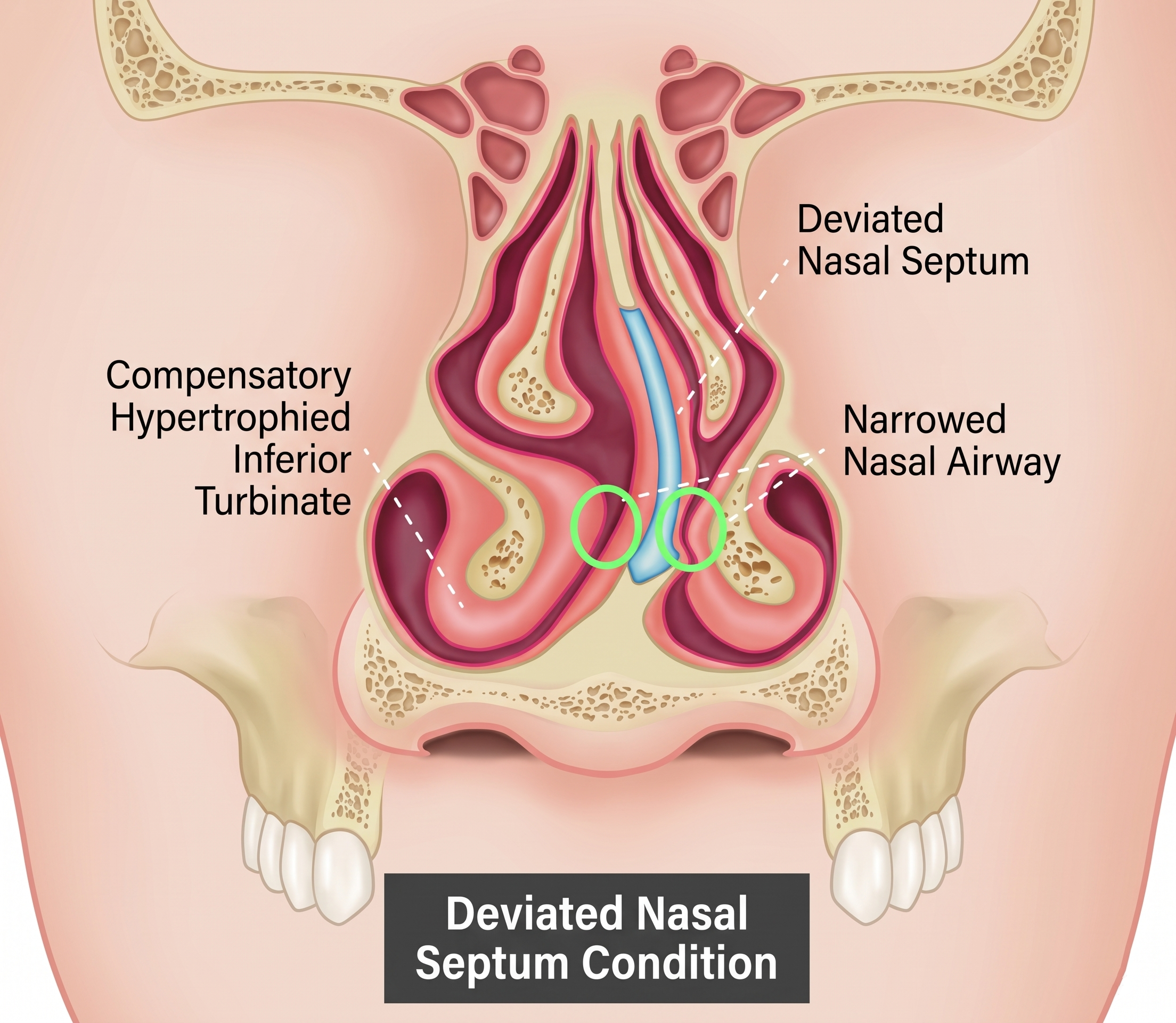
About this procedure
Breathing comfortably is essential to your quality of life. Functional Rhinoplasty is designed to improve nasal airflow and correct structural issues that may cause breathing difficulties, congestion, or nasal obstruction. By addressing concerns such as a deviated septum, weakened nasal support, or other functional abnormalities, this procedure helps restore proper nasal function while maintaining or enhancing the natural appearance of the nose. The result is improved breathing, greater comfort, and a nose that looks as good as it functions.
Functional Rhinoplasty Point: Nasal Septum Deviation
When the nasal septum is abnormally bent, it obstructs the air passage and leads to poor airflow. This deviation can cause constant nasal congestion as the turbinates may become pressed and hypertrophic on one or both sides. Persistent congestion can irritate the nasal mucosa and nerves, potentially leading to sleep disturbances, chronic sinusitis, nasal snoring, sleep apnea, headaches, and other related issues that require medical attention.
Deviated Septum
Poor airflow, chronic congestion
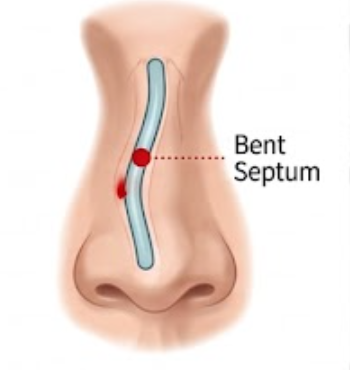
‹ Nasal Septum Deviation ›
Normal Nose
Symmetrical airflow, no congestion
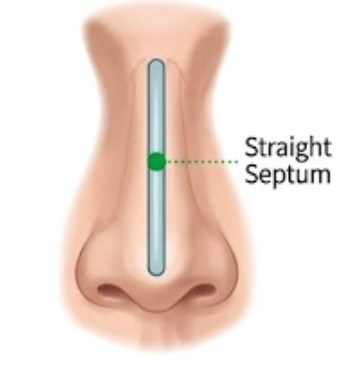
‹ Normal Nose Structure ›
Benefits
Functional Rhinoplasty — Benefits
Corrects a deviated septum, improving airflow through one or both nostrils
Repairs internal nasal valve collapse — a common cause of chronic congestion not fixed by septoplasty alone
Repairs external nasal valve collapse — often seen when nostrils visibly collapse inward during inhalation
Reduces or eliminates chronic nasal obstruction and congestion unresponsive to medication
Improves airflow disrupted by turbinate hypertrophy when combined with turbinate reduction
Can resolve breathing difficulty caused by prior trauma (e.g., nasal fracture) that altered internal structure
May reduce snoring or mild sleep-disordered breathing tied to nasal obstruction
Restores structural support to weak or collapsed nasal sidewalls using cartilage grafts (e.g., spreader grafts)