About this procedure
Both treatments use the body’s own biological materials to stimulate healing, regeneration, and rejuvenation — making them popular “natural” alternatives or complements to other cosmetic procedures.
What they are
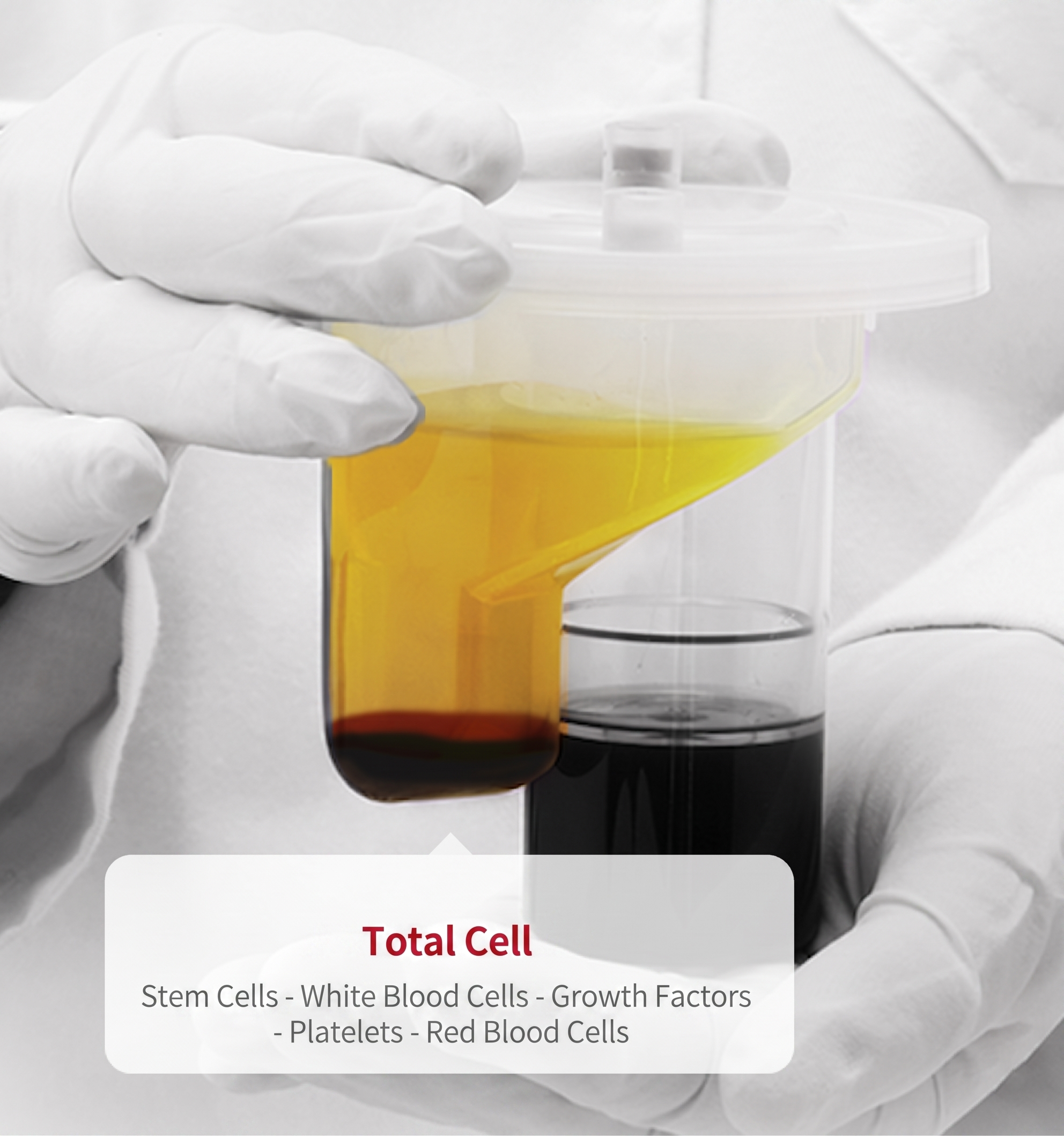
PRP (Platelet-Rich Plasma) — your own blood is processed to concentrate platelets and growth factors, then reinjected to stimulate collagen production and tissue repair.
Stem Cell Therapy — uses stem cells (commonly derived from the patient’s own fat tissue, or in some cases other sources) to promote tissue regeneration, repair, and rejuvenation at a cellular level.
About this procedure
Common uses
Skin rejuvenation and “glow” (often called the “vampire facial” when PRP is combined with microneedling)
Under-eye hollows and dark circles
Hair loss / thinning (PRP for scalp)
Acne scarring
Wound healing support after other procedures
Overall skin texture, elasticity, and tone improvement
Joint / tendon issues (non-facial use, for context)
Step-by-step procedure
- 1
Blood draw — a small amount of blood is drawn from your arm, like a regular blood test.
- 2
Centrifugation — the blood is spun in a centrifuge to separate and concentrate the platelet-rich plasma from red blood cells.
- 3
Preparation — the PRP is drawn into a syringe.
- 4
Numbing — topical numbing cream applied to the treatment area.
- 5
Application
- Injection — PRP injected directly into target areas (under-eyes, scalp, scars).
- Microneedling + PRP — tiny channels created in the skin, then PRP applied topically so it absorbs deeply (the “vampire facial”).
- 6
Aftercare — mild redness / swelling managed with cooling; sun protection advised.
- 1
Harvesting — stem cells are typically collected from the patient’s own fat tissue (via mini liposuction) or other approved sources.
- 2
Processing — cells are isolated and concentrated in a lab or specialized device.
- 3
Numbing — local anesthesia applied to both harvesting and injection sites.
- 4
Injection — concentrated stem cells are injected into the target area (face, scalp, scars).
- 5
Aftercare — instructions on rest and avoiding strain on harvested / injected areas for a few days.
What happens afterward
Immediately: mild redness, swelling, or bruising at injection sites.
First few days: skin may look slightly irritated before improvement begins.
2–4 weeks: initial improvements in skin texture and glow become visible.
2–3 months: fuller results as collagen production and tissue regeneration continue.
Hair loss treatment (PRP): often needs several months of consistent sessions before regrowth is noticeable.
Typical treatment plan
PRP: series of 3–4 sessions, spaced 4–6 weeks apart, with maintenance sessions every 6–12 months.
Stem cell therapy: often fewer sessions needed due to stronger regenerative effect, but more involved / costly per session.
Frequently combined with microneedling, laser, or other treatments for enhanced results.
Benefits
Uses your own biological material — lower risk of allergic reaction or rejection
Stimulates natural collagen & tissue regeneration
Improves skin texture, tone, and elasticity
Reduces under-eye hollows and dark circles
Supports hair regrowth (PRP for thinning hair / hair loss)
Improves acne scarring when combined with microneedling
Natural, gradual-looking results — no foreign substances, builds over time
Minimal downtime compared to surgical options
Can enhance results of other treatments (laser, microneedling, surgery) by speeding up healing and improving outcomes
Stem cells offer stronger regenerative potential than PRP alone, useful for more significant tissue repair needs