About this procedure
Cosmetic dentistry improves the appearance of your smile — its color, shape, size, and alignment — using treatments that range from quick, non-invasive whitening to custom-made veneers.
About this procedure
1. Teeth Whitening
A bleaching agent (usually hydrogen peroxide or carbamide peroxide) breaks down stains within the tooth enamel to lighten its color.
Gums are protected with a barrier / gel to avoid irritation
A concentrated whitening gel is applied to the teeth
Sometimes activated with a special light or laser to speed up the process
Repeated in 15–20 minute cycles, total session about 1 hour
Results visible immediately — often several shades brighter
Custom-fitted trays are made based on impressions of your teeth (for a precise fit)
A lower-concentration gel is provided to use at home
Trays worn for a set time daily (e.g., 30–60 minutes) over 1–2 weeks
Gradual brightening, less intense than in-office but more flexible
Brighter, more youthful-looking smile
Non-invasive — no alteration to tooth structure
Quick results (in-office) or flexible, gradual results (take-home)
Boosts confidence in everyday smiling and photos
Relatively affordable compared to other cosmetic dental options
2. Veneers
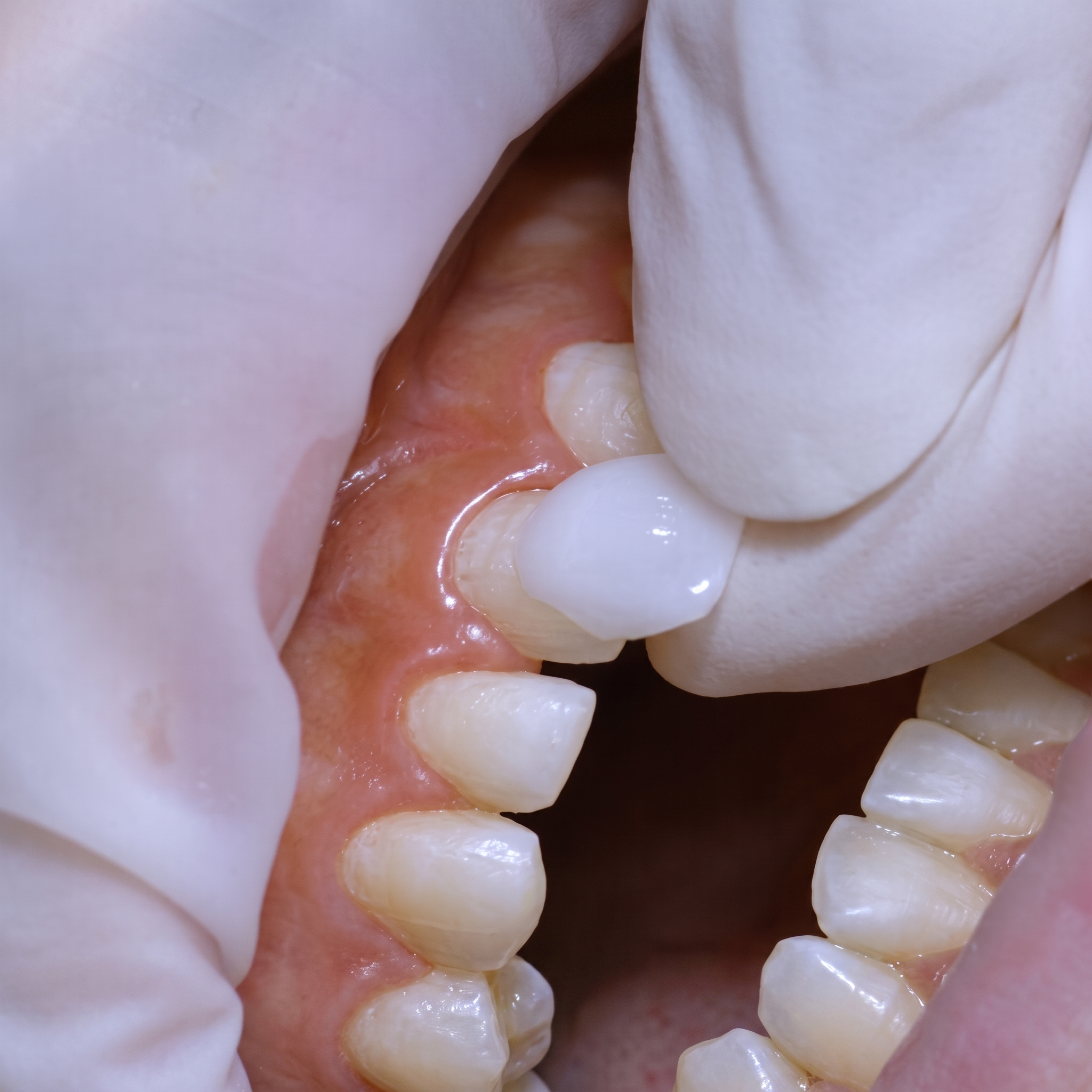
Porcelain is the preferred material for veneers because it is thin, lightweight, and closely resembles the natural appearance of tooth enamel. Since veneers are placed on the front surface of the teeth, porcelain can be made very thin while still providing excellent strength and durability.
Its translucent, glass-like quality reflects light similarly to natural teeth, creating a bright, lifelike smile. Porcelain is also resistant to staining, helping your veneers maintain their beautiful appearance for years with proper care.
- 1
Consultation & planning — dentist discusses desired shape, color, and smile design with you.
- 2
Tooth preparation — a small amount of enamel is gently filed off the front of the tooth to make room for the veneer (minimal for some bonding-based options).
- 3
Impressions / digital scan — taken to custom-fabricate the veneers (for porcelain, this is sent to a dental lab).
- 4
Temporary veneers — placed while permanent ones are being made (porcelain only).
- 5
Bonding — once ready, veneers are checked for fit / color, then permanently bonded using a strong dental adhesive and cured with a special light.
Porcelain veneers — more durable, stain-resistant, natural-looking translucency; takes 1–2 visits over a couple weeks
Composite veneers — applied directly and shaped by the dentist in a single visit; less costly but less durable than porcelain
Dramatically improves tooth shape, color, and alignment in one treatment
Long-lasting (porcelain: 10–15+ years with good care)
Stain-resistant (especially porcelain)
Can correct chips, gaps, discoloration, and minor misalignment without orthodontics
Natural, customizable appearance
Benefits
Teeth Whitening
Brighter, more youthful-looking smile
Non-invasive — no change to tooth structure
Fast results (in-office) or flexible at-home option
Affordable compared to other cosmetic options
Boosts confidence in smiling and photos
Veneers
Transforms tooth shape, color, and alignment in one treatment
Long-lasting (porcelain: 10–15+ years)
Stain-resistant, natural-looking finish
Corrects chips, gaps, discoloration, and minor misalignment without braces
Fully customizable to desired smile look